Hire a Film Crew in Scotland: 7 Steps to Get It Right
Need to hire a film crew in Scotland and make it work first time? Whether you are a brand flying in for a two-day shoot or an agency delivering a campaign across three locations, the crew you choose decides how calm those days feel. Scotland has a deep, experienced crew base from Edinburgh and Glasgow to Inverness and Islay, but knowing who to book, what to ask and when to book them is the difference between a smooth shoot and an expensive scramble. BrightWolf Films crews and manages productions across the country every week, so here are the seven steps we would take in your position.

Step 1: Define the job before you call anyone
The phrase ‘film crew’ covers a lot of ground. A corporate interview day might need a director, a camera operator, a sound recordist and perhaps a gaffer. A broadcast commercial adds a focus puller, grip, hair and make-up, a stylist and a production assistant or two. A documentary shoot in the Highlands might be two people, four-wheel drive and a very good weather app. Before you approach anyone, write down what the film is for, where it will run, when it must land and roughly what it needs to look like. Crewing follows from that, not the other way round, and any crew worth hiring will ask you those questions first anyway.
Step 2: Decide between hiring crew and hiring a production company
There is a real difference between booking individual crew members and appointing a production company to run the job. If you already have an experienced producer and a locked plan, hiring a freelance crew directly can work well and keeps costs lean. If you are visiting from London, Paris or New York, a Scottish company that crews the job, manages it and delivers the film takes far more off your desk: one contract, one accountable team, and local knowledge on tap. BrightWolf Films works both ways, supplying crew for visiting productions and running whole projects end to end, so it is worth being honest with yourself about how much you want to manage from a distance.
Step 3: Check the credentials that actually matter
Anyone can buy a camera; the credentials that count are duller and more important. Ask about public liability insurance and make sure the cover suits your locations, including any drone work. Ask who holds the risk assessments and how they handle them. If aerials are on the list, confirm the operator holds a current CAA flyer ID and the right permissions for the locations you want, because a grounded drone on shoot day is a schedule you cannot get back. Then look at recent credits and ask for a reference from someone who worked with the crew in the last year, not five. A crew that is busy, insured and upfront about its regulars is a crew you can build a shoot around.
Step 4: Lock kit and logistics early
Scotland looks compact on the map and then quietly teaches you about single-track roads. Crew and kit need to travel realistically: a location that reads as ninety minutes from Glasgow can take three hours with a van load of equipment, and that changes your crew day before anyone presses record. Book camera, grip and sound kit through companies your crew already works with, because familiar kit is faster kit. If you are shooting in Edinburgh during festival season or the summer months, sort accommodation early, as rooms vanish and prices climb. A good crew will flag all of this before you ask; a great one will already have it costed.

Step 5: Get permits and permissions moving
Filming permissions in Scotland are generally friendly and very real. Film Edinburgh supports productions shooting in the capital, from permits and street access through to local crewing, while Screen Scotland champions filming across the whole country and helps productions navigate locations, funding and studio space. Councils elsewhere run their own film offices, and estates, castles and private land each come with their own arrangements. The lesson for anyone who wants to hire a film crew in Scotland is simple: permissions are rarely the hard part, but they take diary time, so start them the week you confirm dates, not the week before the shoot.
Step 6: Build in weather cover
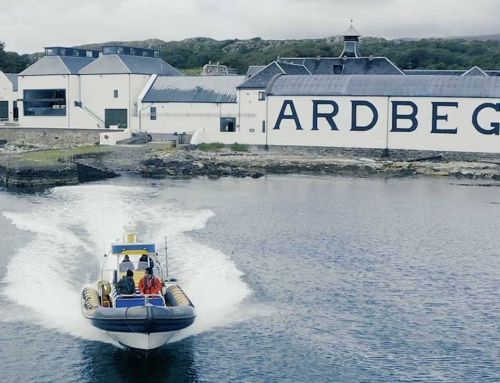
Scotland is gorgeous and unreliable, often in the same afternoon. A sensible plan carries cover options: an interior alternative, a weather day written into the schedule, and a crew that treats a rainy call time as a production problem to solve rather than a surprise. On a shoot for Ardbeg on Islay, the crew made a day of genuinely wild weather work for the film rather than against it, which is the right attitude to hire for. Ask any crew you shortlist how they plan for weather, and listen for specifics: cover sets, sheltered locations, kit that survives the west coast. Vagueness here is useful information too.
Step 7: Agree how the rushes get home
If your team is visiting, decide before the shoot how footage will be reviewed and delivered. Remote dailies are now standard expectation rather than a luxury: producers increasingly review each day’s material from home while the shoot continues in Scotland. Agree secure transfer, backup discipline and naming conventions up front, and make sure someone owns the data on set. BrightWolf sends rushes home to visiting clients so the edit can start while they are still in the air, and it is worth asking any crew you hire the same question. Footage that only lives on one card in one camera bag is a risk you do not need.
Case study: a crew that scaled to the job
For VLURE’s track Something Real, commissioned by Sony Music Entertainment, BrightWolf Films supplied lead producer Simone Bett and producer Magnus Wake to manage a full-day shoot across Govan Workspace and SWG3 with director James Price, cinematographer Steve Cardno and a full Scottish-based cast and crew, before handling the final colour grade and delivery back to the label. It is a fair illustration of what a well-crewed day in Scotland looks like: specialists who all know each other, one accountable production, and a finished film delivered to the client’s standard. You can read more about that shoot in our VLURE Something Real behind-the-scenes story.
Watch the film: Deep Oyster – marine conservation filming for Glenmorangie
Crewing is not only for studios and city streets, either. For the DEEP project with Glenmorangie, BrightWolf documented the deployment of 20,000 native oysters in the Dornoch Firth, a specialist documentary job on and around the water whose footage went on to feature on platforms including CNN and the BBC. Different environment, different kit, same principle: the right specialists, properly briefed, with logistics that suit the location.
What it costs, and how to compare quotes
Day rates vary with seniority, specialism and how awkward the location is, so the useful comparison is between itemised quotes rather than headline numbers. Look for day rates, overtime, kit, travel, accommodation and contingency listed and explained, and ask what is excluded as well as included. Usage rights deserve a line of their own: where the film will run, for how long, and what a renewal costs. A cheap quote with no contingency and vague usage terms tends to become an expensive one by the time the invoice arrives. Transparency on paper is a better predictor of a calm shoot than any showreel.
Where BrightWolf Films fits
BrightWolf Films crews and manages productions across Scotland from an Edinburgh base, for brands, agencies and broadcasters, covering everything from whisky brand films and government campaigns to music videos and live streaming. If you want to hire a film crew in Scotland and have the whole thing run as one accountable job, start with our Edinburgh video production page or our video services overview. For more background before you book, we have written about the eight roles behind every great shoot and what to expect from film production services in Scotland, and Film Edinburgh keeps a production guide that is a sensible first stop for visiting teams.
One last piece of advice: book early. The best crews in Scotland are busy crews, and the ones you actually want on your shoot are usually confirmed first. A short conversation about what you are making, where and when, is the cheapest insurance you will ever buy for it.