Filming Video in Scotland: A Producer’s 9-Point Plan
Filming video in Scotland looks simple from a treatment: pick a castle, point the camera at a loch, wrap by five. Anyone who has actually run a shoot here knows the truth is richer than that. Scotland is one of the most rewarding places in Britain to film – extraordinary light, serious crew depth and locations that do half the storytelling for you – but it rewards producers who plan properly and punishes those who do not. This is the plan BrightWolf Films works through before a single crew member is booked: nine points that take a Scottish shoot from hopeful idea to filming day that actually runs.

1. Start with the story, not the scenery
The most common planning mistake is falling in love with a location before knowing what the film needs to say. Scotland can sell almost anything – whisky, software, public health, wilderness – but the story decides whether you need Edinburgh’s Georgian geometry, Glasgow’s industrial texture or a Highland road that runs out of signal. Write the message down in one sentence first. Every location and logistics decision after that gets easier, because you are testing options against something rather than choosing whatever looks best on Instagram.
2. Choose your region before your location
Scotland is bigger than it looks on a map, and travel time is the hidden line in every budget. A shoot that hops between Edinburgh, Glasgow and a Highland glen can quietly burn two crew days a week in transit. Pick a region and build around it: the central belt gives you cities, studios and the deepest crew pool; Fife and the east coast give you fishing villages and golden beaches within an hour of Edinburgh; the west and north give you the big landscape frames at the cost of longer unit moves. Our industrial Glasgow locations episode shows how much character sits within a few miles of the M8, and our Fife filming guide covers the coastal option in detail.
3. Plan around the light, not the diary
Scotland’s latitude is a creative asset and a scheduling constraint. In June you can be shooting golden hour at nine in the evening; in December the usable light can be gone by four, which turns a five-setup day into a three-setup day. When clients ask us about filming video in Scotland at short notice, the first thing we check is not the weather forecast but the sunrise and sunset times for the shoot dates, because those numbers shape the whole call sheet. If your film depends on long summer evenings, book months ahead – every producer in the country has the same idea.
4. Budget a weather plan, not a weather wish
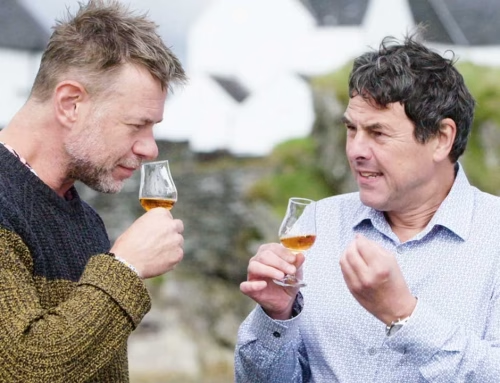
Scotland’s weather is changeable in a way that is charming on holiday and expensive on a shoot. The professional response is not optimism, it is cover: a wet-weather location within reach, interior setups that can absorb a lost morning, and a schedule with slack in it rather than a day where every minute is accounted for. On one Ardbeg shoot on Islay the crew got everything filmed in a single wild-weather day precisely because the plan assumed the sunshine might not cooperate. Build the same assumption in and the weather becomes texture rather than crisis.
5. Get permits and permissions moving early
Filming in public spaces usually means permits from the local council, and some locations – castles, estates, parks – have their own access arrangements on top. None of it is difficult, but all of it takes longer than visitors expect, especially in festival season when Edinburgh’s streets are busy and so are its film office inboxes. Start permissions as soon as locations are shortlisted, not once they are locked. The Screen Scotland filming pages are a sensible first port of call for how the system fits together, and city film offices are genuinely helpful when approached early.
6. Crew locally
Scotland’s crew base has grown up around years of high-end drama and commercial work, so there is no need to freight a full team up the M6 or fly one in. Local crews bring local knowledge: which recce shots lie about distances, which car parks flood, which catering van turns up. For visiting productions this is the single biggest saving a Scottish production partner offers – the crew is already here, insured and used to working with each other. It also keeps the carbon footprint of the shoot down, which more clients now ask about.
7. Match the kit to the terrain
The plan should name the kit, not just the camera. Will the unit vehicle reach the location or does gear go in on foot? Is there power on site or do you bring a generator? Do you want aerials, and if so is the operator CAA-licensed for that airspace? A loch-side hero shot is only cheap until you price the boat, the safety cover and the extra hour of rigging. Deciding all of this on a recce rather than on the day is what separates a smooth Scottish shoot from an expensive picnic.
8. Build in a contingency day
If the schedule cannot survive losing half a day, it is not a schedule, it is a hope. For multi-day shoots we plan a deliberate spare window, and for single-day shoots we design setups so the priority shots come first. This matters double in Scotland, where a front can sit on a Highland location for a day and a half and then leave as if nothing happened. Clients rarely remember the contingency that was not needed. They always remember the one that was.
9. Plan the edit while you plan the shoot
Delivery shapes production. If the film needs vertical cutdowns, subtitled versions, stills for press and a shorter edit for paid social, those requirements change what gets filmed and how it gets logged. Sorting the post pipeline before the shoot – editing, grading, sound, versioning – means the footage is captured with every output in mind. It is far cheaper to film an extra clean wide on the day than to discover in the edit that no shot will crop to a phone screen without falling apart.
What the plan looks like in practice
The films below came out of exactly this kind of planning. While this documentary series was made for Reforesting Scotland rather than a commercial brief, it shows the standard a well-planned Scottish shoot delivers: multiple locations across the country, honest conditions, and footage that holds up because the schedule respected the landscape rather than fighting it.
Watch the film: The Deep Oysters Restoration – and read how the series came together on our project page.
Industry support you should know about
Scotland backs its film sector properly. Screen Scotland promotes the country as a filming destination and helps productions navigate funding, locations and studio space, while Film Edinburgh supports crews shooting in the capital with permits, locations advice and a production guide. Regional screen offices such as Fife Screen and Tay Screen do the same for their patches, and our interview with Julie Craik covers what they can unlock for a visiting production.
Talking to BrightWolf Films
BrightWolf Films plans and delivers shoots across Scotland from our Edinburgh base – brand films, commercials, documentaries and inbound service production for visiting teams. If you are weighing up filming video in Scotland and want a straight answer on what your idea would take, start with our video services overview or our practical guide to video shooting in Scotland, then bring us the one-sentence version of your story. We will tell you honestly what it needs – and that conversation is usually the shortest distance between a plan and a filming day.