
Camera Crew in Scotland: 8 Things to Know Before You Shoot
Hiring a camera crew in Scotland sounds simple until you are three weeks from a shoot date, your client is in another time zone, the location is two hours from the nearest city and the forecast keeps changing its mind. Whether you are a brand making a film for the first time or an agency flying in with an approved creative, understanding how crews here actually work will save you money, time and stress. BrightWolf Films has spent years crewing shoots across the country, from Edinburgh streets to west-coast water, and this guide covers what we wish every client knew before they booked.

Who is actually on a camera crew in Scotland?
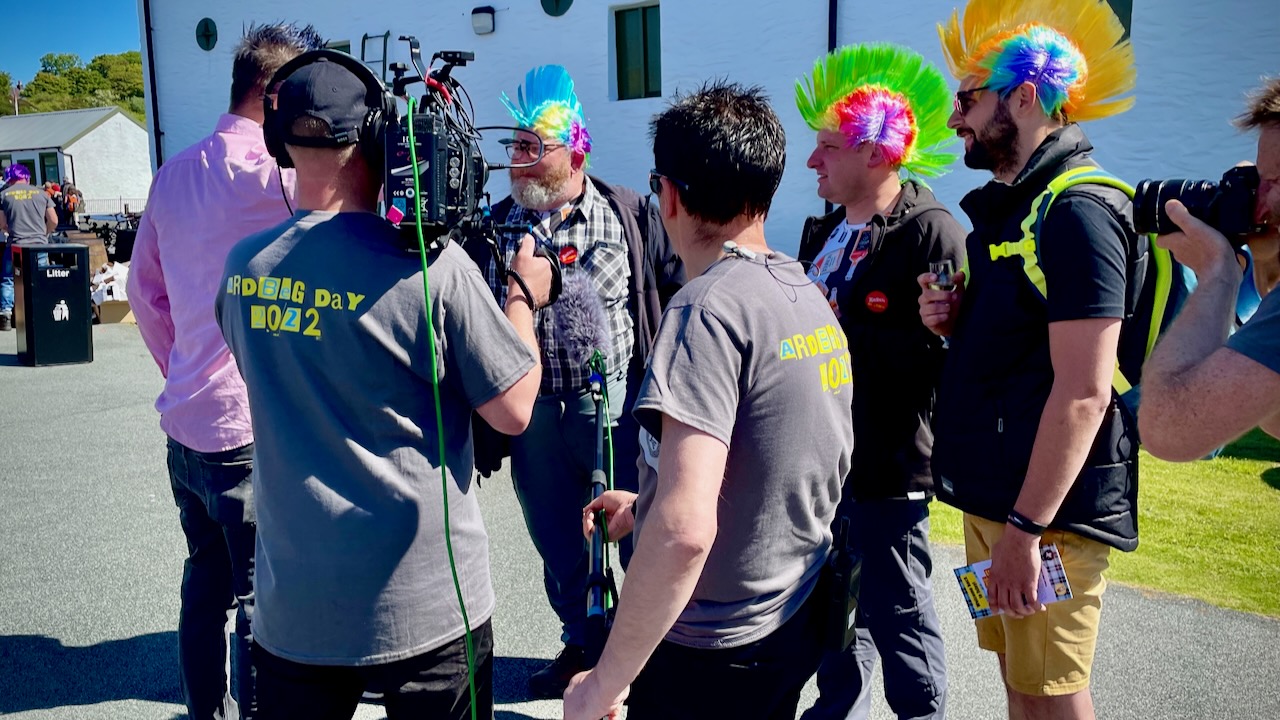
Crew shapes vary enormously, and one of the most common misunderstandings is assuming a ‘camera crew’ is one person with a nice camera. For most commercial and brand work, a workable core looks like this:
- Director or director of photography – owns the look of the film and often the interviews.
- Camera operator and assistant – on bigger days, a focus puller keeps the images sharp while the operator works.
- Sound recordist – the most underrated person on set. Bad audio sinks good pictures.
- Gaffer and lighting assistant – shapes the light so your film looks a league above a phone video.
- Grip or drone operator – movement, whether on a stabiliser, a slider or a CAA-licensed aircraft.
- Producer or production coordinator – keeps the schedule, the permissions and the tea moving.
A small corporate interview might run with two or three of these. A broadcast commercial might run with all of them plus a production designer. The right question is not ‘how big is the crew?’ but ‘what does this particular shoot need to run safely and look cinematic?’
8 things to know before you book
1. Define the job before the crew
A talking-head interview, a product film, a live event and a music video pull completely different crews. Tell your production company the outcome first and let them shape the team. A good Scottish crew will happily tell you where you can slim down – and where you genuinely cannot.
2. Ask about the bench, not just the reel
One brilliant director of photography is not a crew. Ask who the regular operators, sound recordists and gaffers are, and how deep the relationships run. Scotland’s crew base has grown hugely through years of high-end drama and commercial work, but the best companies hold a trusted circle they have worked with for years. That is what keeps a shoot calm when weather, traffic or a nervous contributor threatens the schedule.
3. Local knowledge is a real, priceable skill
Scotland is compact on the map and deceptive on the road. A location that reads as 90 minutes can become three hours on a single-track route, and that changes your crew day, your overtime and your sunrise window. Crews who work here full time know where the light falls in each season, where a generator can park, and which hotel has rooms in festival season. That knowledge is worth paying for.
4. Permits and access run through relationships
City-centre filming, coastal estates, harbour walls and castle grounds all come with their own gatekeepers. Film Edinburgh supports productions shooting in the capital, from permits through to local crewing, and film offices in Glasgow, Fife and beyond play the same role regionally. An established crew that works with these offices regularly will move your paperwork faster than you expect.
5. Check kit, insurance and safety properly
Ask what is included: camera package, lenses, lighting, sound, monitoring, backup media. Confirm public liability insurance, risk assessments and, where aircraft are involved, CAA-licensed drone operators with the right permissions. None of this is bureaucracy for its own sake – it is what lets a client relax on the day.
6. Plan for weather from day one
Scotland is gorgeous and unreliable, occasionally in the same hour. Good crews build weather cover into the schedule, carry rain gear that actually fits over cameras, and know the indoor alternates within reach of every location. Budget a contingency rather than hoping. Hope is not a schedule.
7. Be honest about rates and what they buy
Crew day rates vary with experience, kit and how hostile the location is. Transparent quoting – day rates, overtime thresholds, kit, travel and contingency all itemised – is a better sign of a professional outfit than any discount. If a quote is vague, the variations later will not be.
8. Think about post before you shoot
The best crews shoot for the edit. Ask how footage will be backed up, how rushes reach the editor and who owns the grade. A crew that can talk you through its data-wrangling and delivery pipeline in plain English is a crew that has delivered before.
Case study: behind the scenes at a luxury title shoot
Crew chemistry is easiest to see on real jobs. BrightWolf Films filmed the behind-the-scenes coverage of Scottish Field’s Luxury issue, following the photography of British supermodel Eunice Olumide MBE on location – a small, fast crew working around a stills team, with all the light, timing and diplomacy that involves. It is a good example of how a tight, experienced unit earns its day rate.
Watch the film: Scottish Field – Luxury
While this film was made for an editorial brief rather than yours, it shows exactly the standard a professional Scottish camera crew brings to a set: speed without fuss, and pictures that flatter the subject. You can read more about the project on our Scottish Field Luxury case study.
Why Scotland rewards a well-crewed shoot
The locations sell themselves: Edinburgh’s architecture reads as medieval, Georgian or thoroughly modern depending where you point the lens; Glasgow offers industrial texture and a film-friendly city centre we explored in our Industrial Glasgow locations film; and within an hour you can be on a loch, a coast or a moor. Water work is part of the repertoire too – filming from boats and RIBs around the west coast is a specialty for crews who know the tides, the skippers and the safety rules. Screen Scotland champions filming across the whole country and helps productions navigate locations, funding and studio space.
What does a day with a Scottish camera crew actually look like?
It usually starts earlier than the client would believe. Kit is checked and packed the evening before, call sheets go out, and the crew meets at a civilised hour only when the schedule allows it – more often the van is loaded before sunrise to catch first light. On location, the first hour belongs to lighting and sound while the producer walks the client through the day. Interviews happen while energy is high, cutaways and beauty shots fill the gaps, and everything is backed up twice before anyone thinks about home. A well-drilled unit makes it look relaxed; that relaxation is the product of a hundred small habits.
Specialist work runs on the same habits with extra layers. Marine days add tides, skippers and safety boats. Drone days add CAA permissions, airspace checks and weather ceilings. Event days add live pressure – there is no second take for a keynote. When you compare quotes, you are really comparing how deeply those habits run through the team that turns up on the day.
Where BrightWolf Films fits
BrightWolf Films provides complete camera crews and production support across Scotland, from our Edinburgh base to Islay, Fife and the Highlands, for brands, agencies and broadcasters. If you are weighing up which camera crew in Scotland to book, start with our video services overview and tell us what you are trying to make, where and when. We will tell you honestly what the shoot needs – and nothing it does not.


