
Drone Services Scotland: 7 Jobs They Do Best
Ask five people what a drone company does and you will get five answers, from wedding photos to roof surveys. The truth is broader and more useful than any of them. When a production company offers drone services Scotland wide, the flying is only half the job: the other half is the planning, permissions and post-production that turn a flight into footage a client can actually use. At BrightWolf Films the drone sits inside a full production offer, and that is precisely why the results hold up on screen.
It is worth being clear about the geography too. Scotland packs a remarkable range of work into a small map: two big cities with distinct skylines, industrial heritage on the Clyde, distilleries scattered down island coastlines, and Highland locations that can be an hour’s drive and a whole weather system away from the nearest town. A drone service here is as much about logistics as aviation. Knowing where the wind comes from in November, which estates need notice and how long the light lasts is what separates a usable flying day from a wasted one. Local knowledge is the product as much as the footage is.
Here are the seven jobs we are asked to do most often, and what each one involves beyond the flying.
Seven jobs, seven answers
1. Cinematic aerials for brand films
This is the bread and butter. A few well-planned flying shots woven into a wider brand film give it scale and pace that ground coverage alone cannot buy. The craft is in matching the drone’s movement to the story: a slow rise for confidence, a tracking shot for momentum. Flown as part of the same shooting day as the ground crew, the aerials and the interviews cut together as one film rather than two, and the client gets a far better return on the same day’s budget.
2. Construction and property progress
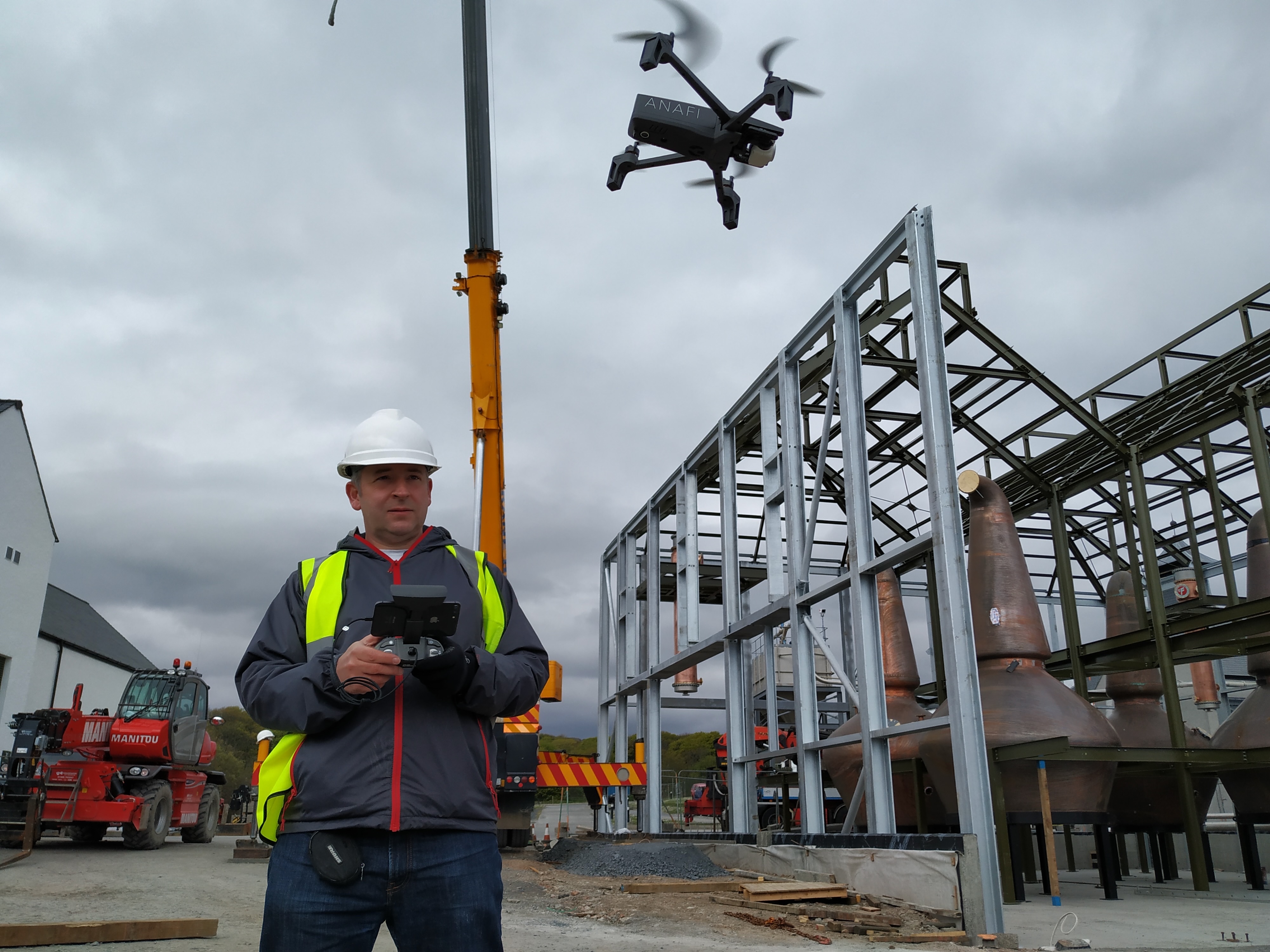
Sites change week by week, and a repeatable flight path from the same height and angle turns months of building into a thirty-second story. Developers and contractors use these films for stakeholders, funders and marketing long before the doors open. The unglamorous part matters most here: consistent timing, matched framing and a log of every flight so each visit lines up with the last. On a distillery build we filmed this way, the site shots became as much a part of the brand story as the finished buildings.
3. Events and festivals
A festival site, a fun run, a stadium crowd at dusk: some events can only be understood from above. Scotland’s events calendar gives plenty of excuses, from city-centre celebrations to Highland games on a hillside. Event aerials feed social clips on the day and the aftermovie later, which makes them a rare two-job shot. It is also the area where safety discipline shows, because flying near crowds has rules that a professional crew treats as non-negotiable. Good event work is planned with the organisers, not sprung on them: where the drone flies, when, and who is watching the crowd while the pilot watches the aircraft.
4. Live streaming and broadcast support
When an event or a launch is streamed, an aerial angle adds production value that viewers notice in seconds. We have integrated drone feeds into multi-camera live setups, including a distillery launch where the flying shots carried the scale of the building and the occasion. It takes a crew who can fly, stream and talk to each other at the same time, which is exactly the point of hiring one team for both. The alternative, two suppliers who have never worked together, tends to show in the first technical hiccup.
5. Music videos
Music video budgets have to work hard, and drones are one of the cheapest ways to make a Glasgow rooftop or a Highland road look expensive. The drone often replaces a jib, a crane or a second unit. Because the shoots move fast and the set-ups change by the hour, an operator who can also light and produce pays for themselves before lunch. We have used exactly this approach on productions across the central belt, where one small crew with one drone covered moves that would once have needed half a page of equipment hire.
6. Location scouting and recce stills
Before a single crew member travels, aerial stills of a location answer the questions that decide a shoot: where does the light fall, where do the trucks park, what is actually visible over that ridge. Producers visiting Scotland from outwith the country find this especially useful, because a recce flight can shorten a scouting trip from two days to one. It also gives visiting agencies and production managers something concrete to show their clients before a single pound is committed to travel.
7. Surveys and documentation
Not every flight is creative. Roof and facade checks, land documentation and stocktaking shots of hard-to-reach places are a growing part of the work, and they share the same backbone as the film work: a qualified pilot, insurance, and a plan for what happens if the weather turns. The deliverable looks different, a survey or a set of stills rather than a film, but the discipline is identical. For estates, Factor-run buildings and industrial sites, it is often the most cost-effective drone job on the list. It is also the work that most often introduces new clients to what else a professional crew can do from the air.
A launch you can watch
To see the streaming side of this in practice, have a look at our coverage of Glenmorangie’s Lighthouse Distillery launch. We handled live streaming and filming for the event, managing the outside broadcast and capturing interviews and on-site footage as the day unfolded. While this film was made for a different brief, it shows the standard we bring to drone services in Scotland when flying is one camera among several: one crew, one plan, several deliverables.
Watch the film: Glenmorangie Lighthouse Launch, and read more about the project on the case study page.
Choosing who flies for you
Whoever you hire, the checklist is the same. Ask for the pilot’s CAA flyer and operator IDs, confirm insurance, and ask how they plan for wind, rain and the light you actually want. If the shoot involves crowds, roads or a historic site, ask what permissions are already in hand and which still need applying for. Our guide to hiring a drone pilot in Scotland goes through it step by step, and a good operator will answer most of those questions before you ask. Ten minutes of that conversation tells you more than any showreel.
Where BrightWolf Films fits in
The reason to bundle drone work into a full production service rather than buying flights separately is coherence. One team plans the aerials around the script, films the ground coverage on the same day and delivers a single set of masters, and the locations, light and edit all agree with each other. You can read more about our production services across Scotland, see the full range of our video services, or get in touch and we will tell you honestly whether your project needs a drone at all.


