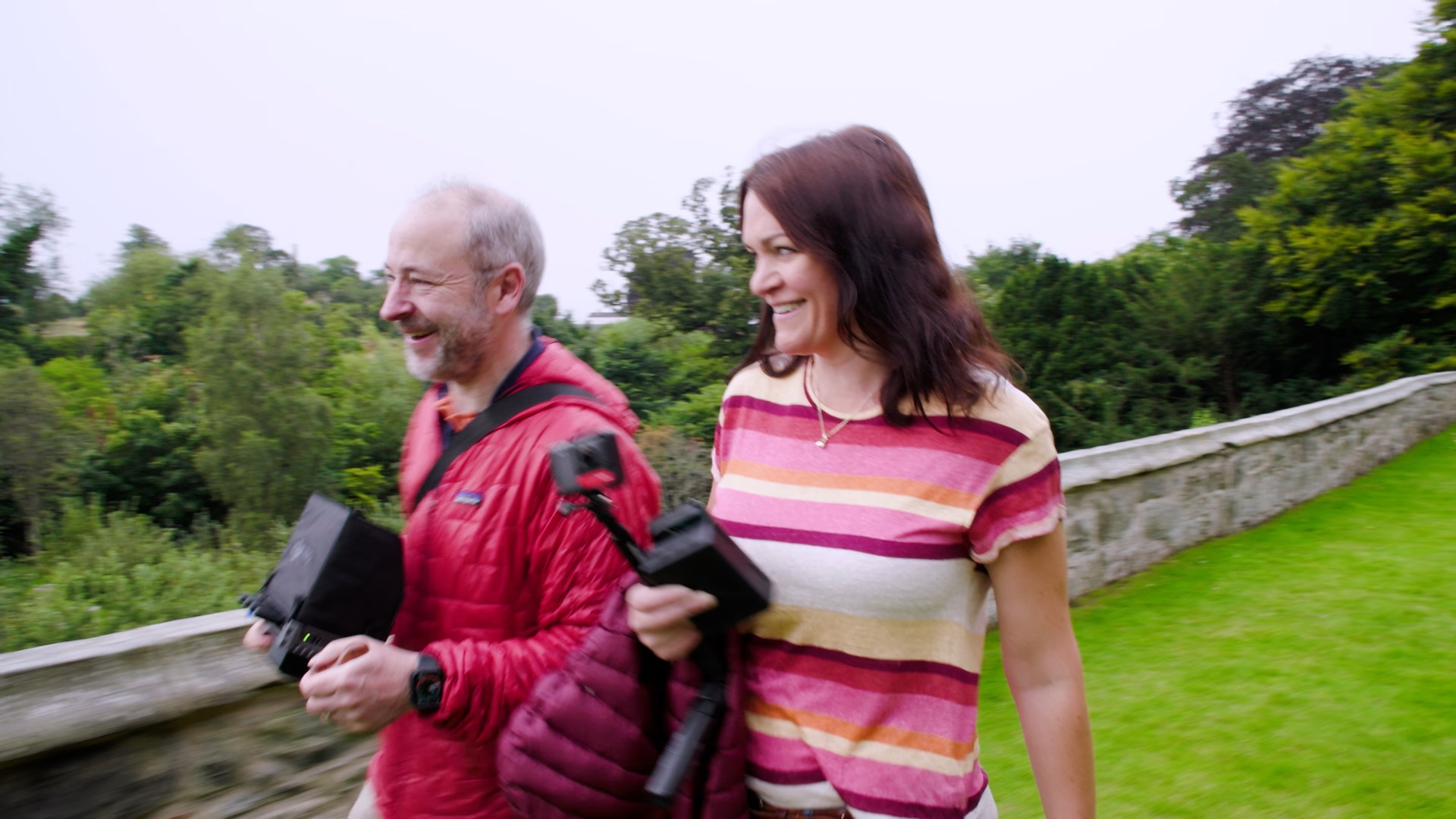
Why Edinburgh is a star of international cinema!
In this BrightWolf Big Five episode we look at why Edinburgh and Scotland is a filming location for cinema: “BrightWolf BigFive: Scottish Filming Locations – Film Edinburgh Rosie Ellison Interview [S1 E3]”
https://youtu.be/-3BCJpy7Xvk
In this episode, we delve into why Edinburgh and Scotland as a filming location for cinema has become a popular destination for filmmakers worldwide, exploring why this Scottish city is a popular destination for filmmakers worldwide. Magnus Wake from BrightWolf Films interviews Rosie Ellison of Film Edinburgh (Edinburgh’s Film Commission), uncovering the city’s cinematic allure and the logistical support available for productions of all sizes. They discuss how Edinburgh’s historic charm and adaptable urban landscapes have attracted major films like ‘Avengers’ and ‘Fast and Furious’.
Additionally, the conversation highlights the comprehensive resources offered by Film Edinburgh, from location scouting to facilitating road closures and connecting filmmakers with local talent and facilities. This episode offers an insider’s view into how Edinburgh seamlessly blends its visual appeal with practical filmmaking support, making it a top choice for both blockbuster and indie filmmakers.
The full transcript is below but we’ve broken the interview into the BrightWolf Big Five main themes.

Edinburgh and Scotland a filming location for cinema
Edinburgh’s allure as a filming location is evident through its unique combination of visual appeal and practical support for filmmakers. Here are five key themes from the interview that make Edinburgh an attractive destination for film productions:
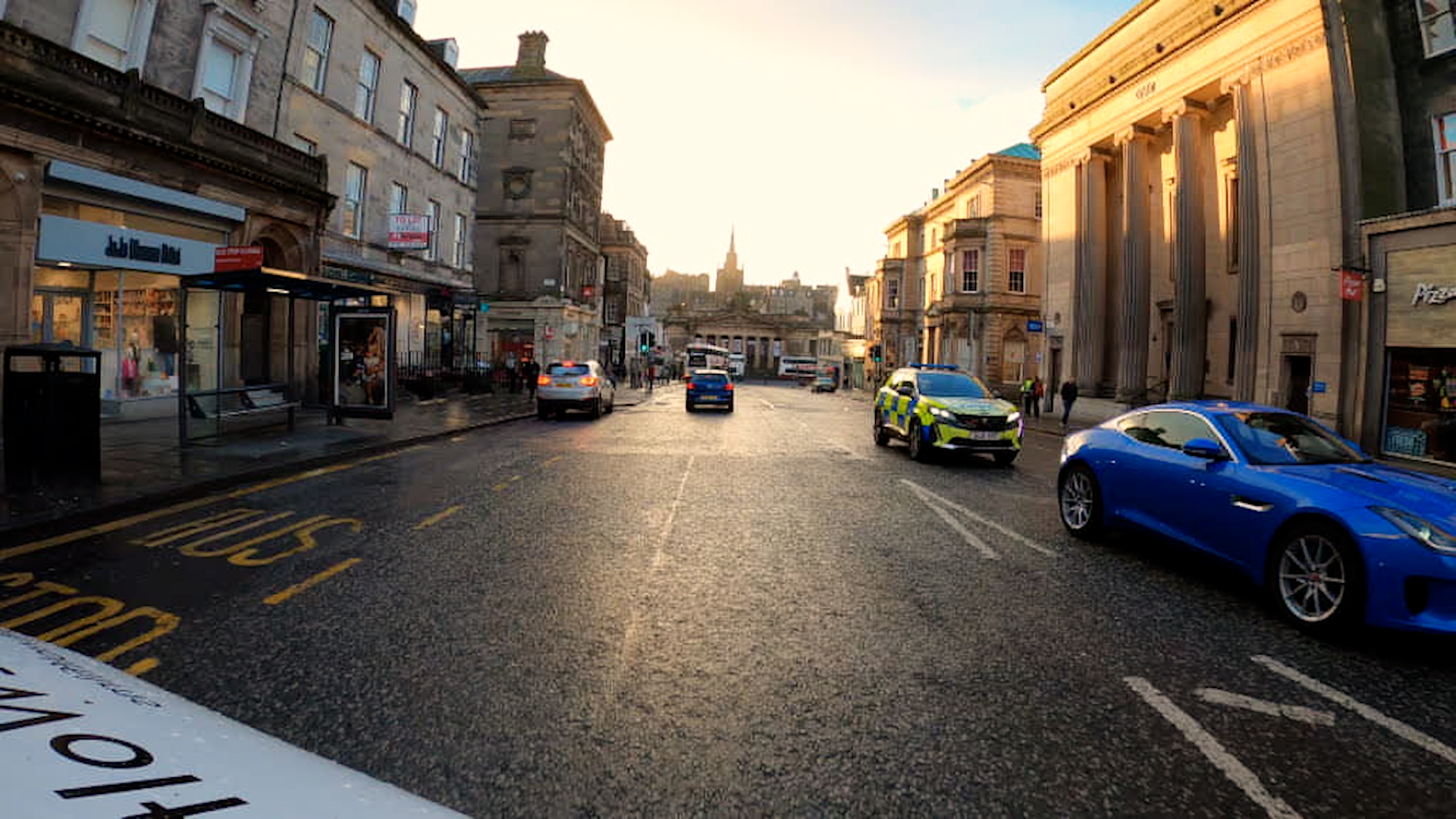
- Iconic Locations and Historic Appeal: Edinburgh is renowned for its stunning historical architecture and picturesque streets, such as the Royal Mile and Victoria Street. These locations offer filmmakers a chance to capture the essence of classic European settings without the logistical challenges associated with more crowded cities like Rome or New York. The iconic view from Calton Hill towards Edinburgh’s Old Town, including the Royal Mile and The Balmoral, underscores the appeal of Edinburgh and Scotland as a filming location for cinema, attracting major films like ‘Avengers’ and ‘Fast and Furious’.
- Comprehensive Support from Local Film Offices: Film Edinburgh plays a crucial role in facilitating film productions within the city. This organization provides extensive support, including location scouting, logistical coordination for road closures, and connections with local crews and facilities. Such comprehensive support simplifies the production process, making Edinburgh not just a visually appealing choice but also a practical one.
- Financial Incentives and Funding Opportunities: Edinburgh offers various financial incentives that are attractive to film productions. These include funding and support from Screen Scotland and access to UK-wide film tax credits. These incentives are designed to encourage productions to choose Edinburgh, ensuring they can achieve high production values while benefiting from economic efficiencies.
- Practical Filming Logistics: The city’s infrastructure is well-suited to accommodate film crews, with streamlined processes for parking, road closures, and permit acquisition. This makes filming in Edinburgh efficient and hassle-free, allowing productions to focus more on their creative outputs rather than logistical challenges. The dedicated film and TV studio in Leith is just one example of how Edinburgh and Scotland serve as a filming location for cinema, providing state-of-the-art facilities and retaining high-caliber local talent.
- Availability of Local Facilities and Talent: Edinburgh boasts state-of-the-art filming facilities, including a dedicated film and TV studio in Leith. This studio has hosted productions from major platforms like Amazon and Netflix, reflecting its capability to support large-scale projects. Additionally, the city’s ability to retain high-caliber local talent enriches its filmmaking community, further enhancing its attractiveness as a film production hub.
Useful Links:
Official Scottish Film Organisations:
Abertay University Viper Room
Screen Scotland
Film Edinburgh
TayScreen and FifeScreen
Other Useful Sites
BrightWolf Films ( our brand, commercials): www.brightwolf.co.uk
Encaptivate Films (drama and broadcast): www.encaptivate.co.uk
Film Bang (Scotlands Online directory for crew and producers): www.filmbang.com
Transcript
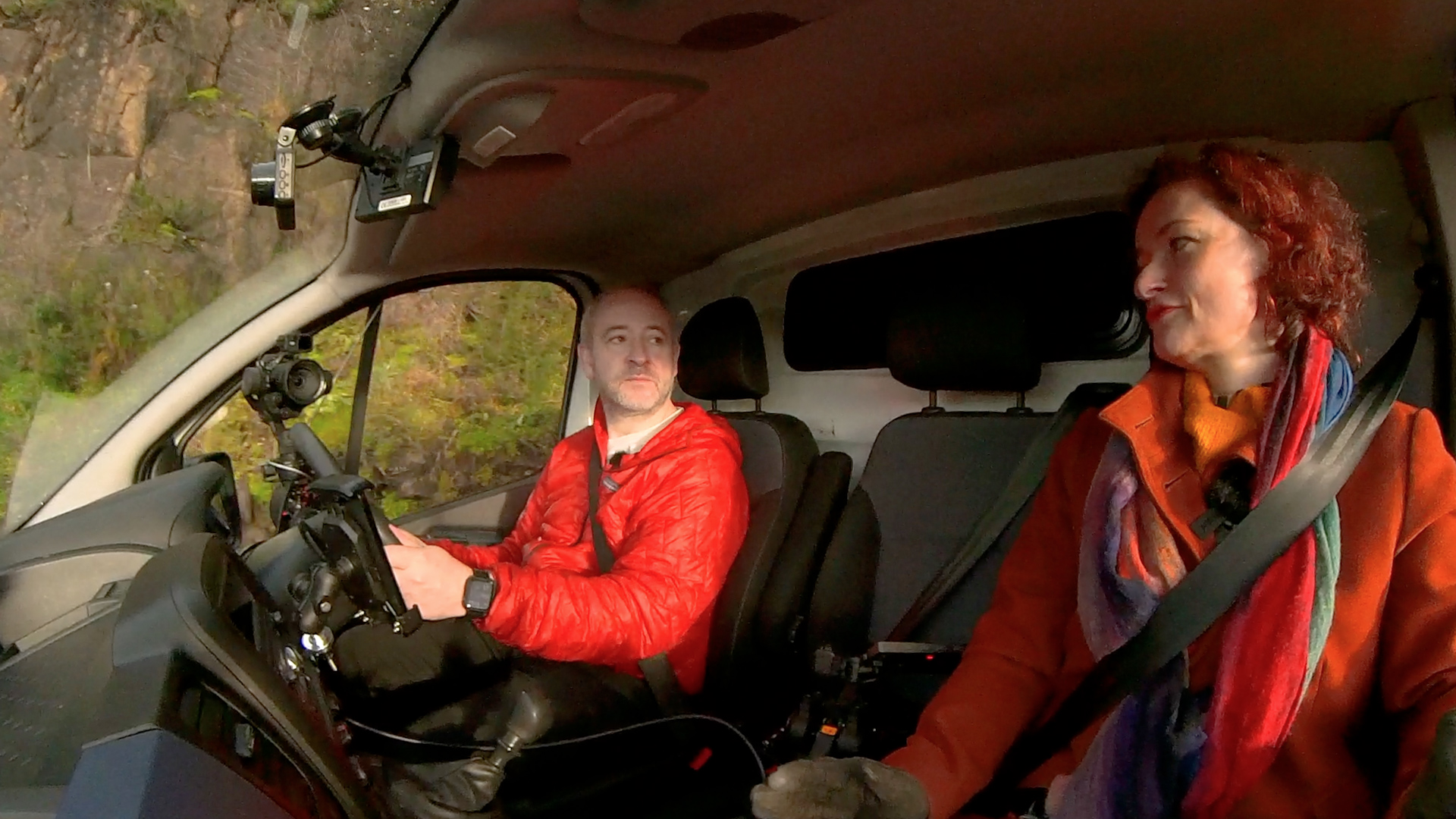
Magnus: Hello, and welcome to The BrightWolf Big Five. So once again, the big five are out and about in a van, but we’ve got something quite special lined up for you this time. We are going into the city centre to grab an interview with Rosie, who is from Film Edinburgh. Let’s find out what Film Edinburgh can do to help you make your films.
Magnus: Okay. So today we’re joined by Rosie. Hi. We’ve just picked Rosie up from the Film Edinburgh offices on the Royal Mile, which is a glorious place in its own right.
Rosie: Certainly is. As many a filmmaker has discovered, it’s been very busy with big films. People will have seen it in ‘Avengers’ and ‘Fast and Furious’.
Magnus: I could easily just start talking about how we’re going down Cockburn Street.
Rosie: Cockburn Street.
Magnus: And everywhere you go, there’s another scene that’s been filmed in Edinburgh.
Rosie: Yeah, yeah. Honestly, especially the big internationally recognised films, they want to come here because this is recognisable Edinburgh.
And they want to show you something that is familiar, but at the same time, not New York, you know, they’re looking for something that’s historic and that’s a little bit, maybe like Rome, we kind of see a lot of Rome on the TV and films these days because people know where it is.
And yet there’s something that we haven’t seen about it. And I think that’s what these big international films are looking for when they come here and they shoot the Royal Mile and Cockburn Street and Victoria Street and, you know, send these pictures out all over the world for audiences young and old, all over the place. And they are very welcome to do so. We do enjoy it.
Magnus: Absolutely. So, Film Edinburgh, what’s the purpose of Film Edinburgh?
Rosie: Film Edinburgh is the regional film office. In America, they’re called film commissions. Our role is to attract or facilitate filming in our local area. We do this through supporting productions. We have advice about locations we, our locations library that commercial productions can make use of.
These are places that the owners have said, we’re interested in having filming or just general landscape shots, you know.
We’ve got lists of crew and facilities based here so that productions can come here and entirely crew up without having to bring everybody with them, though they are very welcome to.
We work with accommodation providers so that when a production comes in, they’re looking for advice about where to stay locally, that’s close to their location or their base. And we can fit that in.
So we deal with road closures, we deal with permits or not, you know, hopefully not because we like to make it as easy as possible, but where a permit is required, we deal with that.
The film office service, it’s free at the point of delivery. We do charge productions with 40 or more crew with a small admin charge.
Magnus: Just to support the unit.
Rosie: Just to support the unit. But the bulk of the revenue, you know, that comes into the council via filming is via things like parking and permits and council property use. Film office doesn’t charge local production companies such as yourself.
Magnus: Yeah.
Rosie: And wouldn’t charge factual TV, light entertainment or anything with a fewer number than 40. I mean, it’s really aimed at the kind of big productions that need quite a lot of ongoing support over several months.
Magnus: So obviously Edinburgh’s been used so many times for so many different productions. Name a few for as far as some of the big films that have used Edinburgh.
Rosie: People will have seen it in ‘Avengers’ and ‘Fast and Furious’. It played Iceland in ‘Eurovision: The Fire Saga.’ There’s a scene in the film down in New Haven Harbor,
It’s also about to appear actually, that location in ‘Anansi Boys’, which I gather is due out soon.
Magnus: A lot of stuff that gets filmed that you just don’t know is being filmed.
Rosie: That’s the beauty of filming. It’s quick. Yeah. You know, no matter how big it is, it’s, you know, there’ll be loads of prep for, you know, big Hollywood blockbuster. Yeah. But even then they’re only ever in a location for usually a day or two and then it’s gone and then, you know, that’s just the Hollywood stuff.
And then, you know, everything else that films here all year round. I mean, we maybe have between 300 and 400 filmed productions taking place in the city every year. Yeah. Most of which people are not going to have the slightest inkling about. So, yeah, you know, unless you live there in that street, you won’t see it. Yeah. They come and go so fast.
Magnus: Yeah. What size of production should get in touch with you guys at Film Edinburgh?
Rosie: Anything really. I mean the film office we deal with commercial productions, so productions that have got a budget, we can’t unfortunately help with, you know, no budget productions. And of course, everyone starts out that way, and that’s how you learn.
But our remit, first and foremost, is economic development for the city. So that’s about making sure that crew are getting hired and paid, locations are getting a fee for their troubles.
That kit is getting hired and paid for and that the end product has the potential to do some good for the city in terms of promotion and therefore bringing visitors in and spending money when they’re here. So that’s, you know, but that doesn’t mean that we’re only after the Hollywood, you know, we also work with all of the actual TV programmes that come here from Location, Location, Location to, Homes Under the Hammer or Saving Lives At Sea or, you know, travel shows, International travel shows, documentaries about witchcraft and wizardry and all that kind of stuff.
They all come through us, even if it’s just for an initial conversation about what if you got or you know, that they know that they want to film specific things and they want to check out whether or not a permit is required or, you know, how to go about finding parking or, you know, just general. It’s kind of a little bit at that level.
It’s a little bit like being a tourist board or something for filmmaking generally. But that’s fine. I mean, we’re here to provide a service to help
commercial film crews of all shapes and sizes come and have the best experience they can here and get what they need and achieve their goals as efficiently as possible.
Magnus: Parking in Edinburgh?
Rosie: Yes.
Magnus: What’s the story with parking?
Rosie: Film crews can have a range of options. You can either pay for a parking bay suspension, which requires two or three days’ notice. You can organise single yellow line dispensations for your technical vehicles to be able to park on lines which normally suggest that you can’t do anything more than stop on for more than 5-10 minutes.
And if you’re a large production and you need to organise parking before the standard restrictions kick in, which is usually about 0830 in the morning, you can organise a TRRO or a TIRO, which is a temporary traffic regulation order or notice, which allows us to put in place restrictions that aren’t normally there. So, for instance, we could close a road or we could take out parking for an event or for filming, over a weekend where normally it’s a free for all, for instance, that kind of thing.
But that’s a larger scale piece of legislation that costs more. You know, it’s really only used by commercials and dramas.
Your average production just uses a parking dispensation or just feeds a meter.
Magnus: Yeah, yeah, yeah. And sometimes it’s easier just to be doing it. Yeah.
Rosie: So the freedom to move around. Yeah.
Magnus: Yeah, exactly. Yeah, yeah. Okay, Next. Next question. Closing roads. Is it hard to close roads in Edinburgh or is it easy to close them?
Rosie: It’s complicated because we, you need to justify it, you know, so it’s not just sort of quite fancy that gives us a lot of control. It’s like do you actually need to close it? So we need to see the kind of paperwork that explains the health and safety reason why it needs to be closed again. It’s used by by big drama productions, large scale productions and fairly large commercials that have got action in the road. So for safety, they need to close things or, you know, if they’re filling the street with a lot of heavy equipment. Again, that’s the kind of thing we might need to close a road for.
It requires at least three weeks notice and that can cost, you know, a thousand minimum and upwards because you’re going to have to hire traffic management people as well as pay for the legislation.
So again, not for the faint hearted.
Magnus: Right. So that’s big productions.
Now, if you come to Edinburgh, is there any money at all? Can you get money from the city?
Rosie: The organisation that hands out money is called Screen Scotland. They’re part of Creative Scotland. Handing out money is obviously a loose term, you have to apply for it, you may not get it. But they, they are the funding agency for films and TV programmes and games and animation and documentaries and fashion programmes, they have the money.
There’s no money for production from the council. The council is there to facilitate and attract, through fabulous locations and crew and Screen Scotland is there to support financially the activity.
Magnus: Okay, that’s cool. Nice and clear. And actually quite often you can easily get in touch with Screen Scotland. There’s a website easy to get in contact with.
Quite often it is done through the local production companies (such as BrightWolf) who are brought in as partners for big production.
Rosie: Much easier.
Rosie: Yeah. It’s much the best way to to go through the screen. Scotland is regularly in contact with most of the production companies and not just in Edinburgh, in Scotland. Yeah, they know them. They’ve got track records, makes applying for money so much easier.
Also there’s two types of money you can apply for from Screen Scotland as a production fund, which is to support Scottish talent. And that’s a qualitative assessment. Do they want to support that project or not? And it has to be with a Scottish producer and director of Creative Talent. Yeah.
And then there’s a sort of incentive fund. It’s called the Production Growth Fund, and that’s about how much money you’re spending when you’re in Scotland It’s up to, I believe, well, it’s quite a big chunk of money.
Magnus: It’s, it’s quite chunky.
Rosie: Quite chunky, but you have to spend quite a lot to get it.
Magnus: You’ve got to have a certain budget. But actually filming anything that’s got high production values or is chosen as a high production value production you can get film tax credits which the UK government does.
Rosie: Yeah, absolutely.
Magnus: So that’s all quite a lot.
Rosie: Yes and in fact, if you were working with a Scottish producer, let’s say you could apply to the BFI for some UK production funding to Scotland, for some Scottish production funding, plus the tax credit for the UK and the production growth fund in Scotland.
Magnus: So it’s all about finding the right partner that can actually guide you through that..
Rosie: Scottish producers, such as you could, so exactly.
Magnus: Exactly.
Down in Leith we have studio.
Rosie: We do, we have Edinburgh’s dedicated, film TV studio. It has been open since 2020. Yeah, since the start of lockdown, which is great because the first production to move in there was Amazon’s The Rig which moved in during that lockdown year, the end of 2020,
Rosie: And it’s been in constant use ever since by Amazon, by Netflix.
Magnus: It did Avengers.
Rosie: Yes.
Magnus: Did they “pre-use”?
Rosie: Yeah. They were in there before it was a dedicated film studio But then when we and Screen Scotland were definitely pushing people towards looking at it as a really great film studio.
Avengers used it for a set of the roof of St Giles Cathedral.
150,000 square feet of build space. You’ve got offices and we’ve got workshops. You’ve got loads of, backlots and parking. And it’s a fantastic facility for us to have. And it’s been a real game changer for the city’s ability to attract large scale production and therefore for the city’s ability to attract and retain crew who want to go to work locally.
Magnus: Yeah,
Rosie: Absolutely. You know, you and I have been here for a long time.
Magnus: For a long time.
Rosie: You know, there have been many other crew who’ve just felt that pull to London or Manchester, even Glasgow. And having this here has resulted in us just being able to say, you probably don’t need to go, this is providing employment for 200 to 400 people.
Magnus: And that’s the thing, you know, in this industry it’s hard to, actually have a career where you can have a family life as well. Yeah, (the industry) it’s not well suited to that. So the more film we can get happening in Scotland, The more places like that will just make it a more sustainable career.
Rosie: For people. Yeah, exactly. And I think people ask how’s that going to help me? You know, I work in adverts, I do factual TV, how’s that going to help? But it does because what it does is allow a crew to work across genre.
Magnus: Yeah.
Rosie: Producers tend to specialise, but crew will work across things. And quite often you find that they want a break after doing a 10-month job on a on a high pressure drama. And they want to just kind of dip in and out for the rest of the year.
Have a few weeks on a commercial and a little bit of factual. And so, there’s more crew that you can work with. They’ve got a huge range of experience.
Magnus: I mean, I may be stating the obvious but they’re high calibre crew. Another reason why Edinburgh and Scotland a filming location for cinema. You know, incredibly knowledgeable been doing it for decades and decades and are now used to working at the top level for the likes of Netflix, for Amazon, Not to mention the BBC and other places in Scotland as well. So the crews are really high quality and they know exactly what they’re doing.
And so it’s quite a good package. There’s a bit of money there. There’s great crews, great locations…
Rosie: Great locations. More facilities are moving here as well, largely pulled in by the by the studio and the kind of work that that attracts. Yeah.
Magnus: Rosie, thank you very much.
Rosie: It’s my pleasure. Really good to talk to you.
Magnus: It’s been good. It’s been fun. I’ve learned quite a lot as part of this process. And more information for anybody that needs it can be found at Film Edinburgh.
Rosie: Yes, that’s true. And I look forward to hearing from people.
Magnus: Thank you.
This concludes the transcript of why Edinburgh and Scotland is a filming location for cinema.