
Aerial Filming Scotland: 8 Ways to Shoot the Sky
Some countries make you work for a decent aerial shot. Scotland hands them out. Castle ruins on loch shores, ridgelines that run for miles, a capital city stuffed with spires and stone – and all of it close enough that you can fly over Edinburgh in the morning and be above an empty glen by lunch. Aerial filming Scotland has quietly become a specialism for exactly that reason, and at BrightWolf Films it is now a core part of how we build brand films, commercials and documentaries.
But great aerials are not an accident, and they are not simply a drone in the boot of the car. Here are eight ways we get more from every flight, learned the slow way across campaigns, documentaries and live broadcasts.
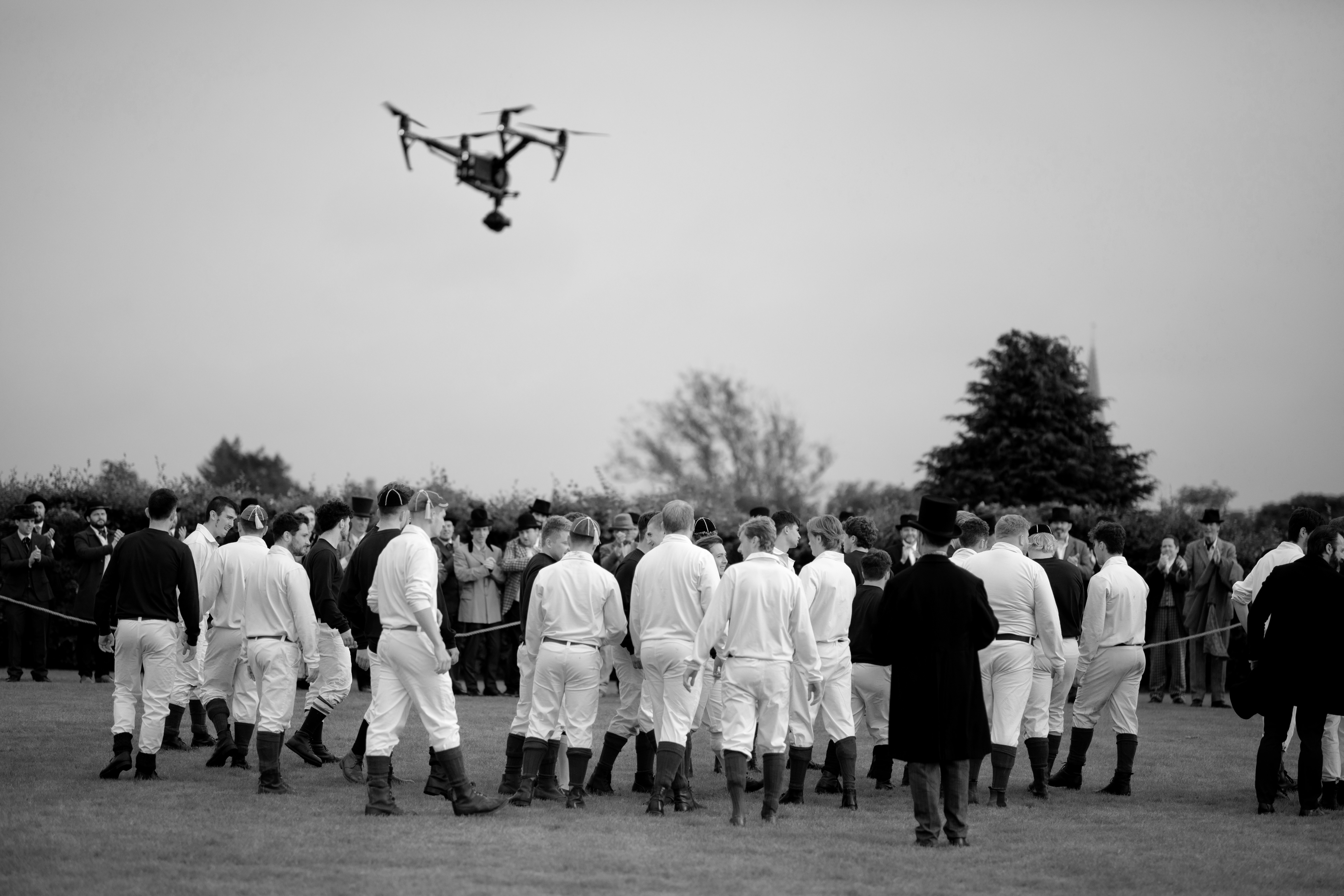
Aerial filming Scotland: why the landscape does half the work
Very few markets offer this range in a single day’s drive. You can shoot a coastal fortress at dawn, a distillery courtyard by mid-morning and a loch at golden hour, with the light changing character every hour in between. Producers flying in from London, Europe or the United States get feature-film backdrops without feature-film travel days, which is why visiting brands increasingly plan an aerial unit into their Scottish schedule rather than treating the drone as a nice-to-have.
There is a practical side too. Crew bases, hire houses and experienced local operators sit in Edinburgh and Glasgow, and the road network is good enough that a two-location day is routine rather than heroic. When a client asks for a castle, a coastline and a city in one film, Scotland is one of the few places where the answer is a shrug rather than a spreadsheet.
1. Match the aircraft to the story
A sub-250g travel drone is perfect for a nimble rooftops-and-alleyways sequence in the Old Town. A larger cinema platform with a bigger sensor earns its keep on a windswept island, where you need clean low-light performance and glass you can stretch in the grade. The common mistake is bringing one aircraft to every job. Build the kit around the shot list, not the other way round.
2. Plan around the light, not the itinerary
Scottish light is theatrical but brief. In November the sun barely clears the rooftops before it starts sinking; in June you can be filming wide aerials at ten at night. We reverse-engineer the schedule from sunrise and sunset, slot the big-sky shots into the golden bookends and keep midday for detail work, travel or a very good bowl of soup.
3. Fly legal, fly boring
Every commercial flight in the UK sits inside the CAA’s framework: pilot qualification such as the A2 Certificate of Competency or a General VLOS Certificate, registered Operator and Flyer IDs, and an aircraft operating in the right category for the location. None of it is glamorous and all of it matters, particularly around cities, airports and crowds. Clients rarely see this work, which is rather the point – dull paperwork on the ground is what makes exciting footage in the air possible. It also travels: a pilot who is used to Edinburgh’s controlled airspace thresholds will treat a remote glen with the same discipline.
4. Scout twice: on the map, then on foot
Satellite views and terrain tools tell you where the shot is. A walk tells you where the drone takes off. Overhanging trees, livestock, phone lines and a padlocked gate can all reshape a plan, so we scout every aerial location twice and note take-off and landing spots, hazards and the fallback if the weather turns.
5. Make the move tell the story
Anyone can make something fly. The craft is in what the move says: a slow rise that reveals a distillery in its landscape, a push towards a subject that becomes a reveal, a top-down that turns a field into abstract art. If a drone shot could be lifted from any film shot in any country, it is not earning its place in yours.
6. Respect the wind, the rain and the sea air
Scotland’s weather writes the final draft of every flight plan. West coast gusts, coastal spray and winter cold all bite, so we build weather windows into the schedule, keep batteries dry and warm, and always hold a ground-based alternative shot. A producer who promises a specific aerial at a specific minute in Scotland has probably never filmed here. We plan a first choice, a second choice and a third, and we tell clients which is which before the day starts.
7. Sort permissions before you travel
Many of Scotland’s most cinematic spots sit on working estates, in council parks or beside private harbours. Landowner permission, local authority filming notice and, for anything unusual, airspace considerations all take time. Build in a few days and use local fixers who already know who to call. It is a small admin cost that prevents a very large disappointment.
8. Cut the aerials into the film, not on top of it
The strongest films use aerials as connective tissue: an establishing drone shot that settles into handheld, a transition that stitches two locations into one journey. We grade and cut aerial material alongside everything else so the finished film feels like one continuous thought rather than a showreel interrupting itself.
Where the aerials actually earn their keep
In our own bookings, drone days in Scotland tend to fall into a handful of familiar shapes:
- Brand and tourism films, where the landscape is the product and the aerials carry the emotional weight.
- Construction and property work, where the same flight path repeated across months tells a progress story no ground shot can match.
- Events and festivals, where a single establishing aerial explains the scale of a site faster than a minute of ground footage.
- Broadcast and documentary, where aerials give scale and geography to a story that would otherwise live in talking heads.
- Live streams, where a drone feed adds a moving establishing shot to an otherwise static multi-camera setup.
Each of these asks something different of the pilot – slow and smooth for brand work, precise and repeatable for construction, discreet and quick for events – which is one more reason the aircraft, the plan and the pilot should be chosen for the job in front of you.
What this looks like in practice
The film below was made for Dior’s Cruise 2025 show at Drummond Castle, following Geri Halliwell’s journey through Scotland in the days before the event. It was shot for a different brief, but it shows the standard we bring to aerial filming Scotland: considered moves, honest colour and landscape given room to breathe rather than used as wallpaper.
You can read more about the production on the Dior Cruise 2025 case study page.
Planning aerials for your own shoot?
BrightWolf Films is an Edinburgh-based production company supplying drone pilots, camera crews and full production services across Scotland. Our guide to drone filming in Scotland covers the safety and planning side in more depth, and our video services page sets out the full toolkit, from aerials and ground filming to live streaming and post-production.
If you are researching a shoot in the capital, Film Edinburgh is the council-backed first stop for permits and local support, while Screen Scotland charts the wider production landscape. Then give us a call – we are happy to talk through the shots before you commit to a single day on the hill. Often the most useful thing we do on a first conversation is talk a client out of the aerial they do not need and into the two they actually want.


