
Corporate Video in Scotland: 7 Steps from Brief to Delivery
Commissioning corporate video in Scotland has never been easier to start or harder to do well. Every organisation now needs film – for websites, social channels, internal comms, investors and recruitment – but the gap between a video that gets watched and one that gets politely ignored comes down to process. BrightWolf Films has produced corporate and public-sector films across Scotland for years, from government campaigns to charity documentaries, and this guide walks through the seven steps that take a corporate film from first conversation to finished master.
What corporate video actually covers
The phrase is broader than most people think. It includes brand films, case studies and testimonials; internal communications and leadership messages; training and induction content; recruitment and employer-brand films; event coverage and live streaming; and public information campaigns. What unites them is accountability: someone senior has to be sure the film achieves something, on a budget, by a date. That is why process matters more in corporate work than almost any other genre of filmmaking.
The 7 steps from brief to delivery
1. Start with the objective, not the format
The strongest corporate films begin with a plain answer to one question: what should change after people watch this? More enquiries, better-informed staff, a reassured public, a saved venue deposit? When the objective is clear, the format follows naturally – a 60-second social film, a four-minute case study, a streamed event. When the objective is vague, no amount of production polish will rescue it.
2. Write a real brief
A good brief fits on one page: what the film is for, who must watch it, what they should think or do afterwards, where it will run, when it is needed and what the budget range is. Include the people who must approve it – late-arriving stakeholders are the single most common cause of corporate film overruns. A production company that asks sharp questions at this stage is worth its fee.
3. Treatment, budget and honest options
Next comes a treatment: the creative approach, the schedule shape and the budget, with options where they genuinely exist. A half-day single-camera shoot and a two-day multi-crew production can both be ‘corporate video’ – the skill is matching ambition to budget honestly. Beware quotes that promise everything for the least money; the difference usually reappears later as variations.
4. Pre-production, where films are actually won
This is the unglamorous phase that decides whether the shoot day is calm: scripts and interview questions agreed, locations recceed, contributors briefed, permits lodged, risk assessments written, kit booked with weather cover. For public-sector and regulated organisations, this is also where compliance lives – consent forms, accessibility considerations and approval routes. Good pre-production is invisible on screen and unmistakable in the diary.
5. The shoot day itself
On the day, a well-run corporate shoot feels almost uneventful: contributors are put at ease, interviews run long enough to be natural, and the crew wraps with everything the edit needs. Overseeing this is exactly what a professional team is for. Our own interview setups are built around one principle – make the person in front of the lens feel safe enough to be interesting.

6. Post-production: where the story gets sharp
Editing turns hours of footage into a film with one clear idea. Add sound design, music and a considered grade, and a competent corporate film becomes a confident one. Build in a proper review round – ideally no more than two – with one consolidated set of feedback per round, and cut platform versions (a broadcast master, a 16:9 web edit, vertical social cutdowns) from the same grade so the film looks consistent everywhere it runs.
7. Delivery, measurement and reuse
Delivery is more than a file transfer. Confirm the technical specs for each platform, keep the project archived for future re-edits, and agree how success will be measured – view-through, enquiries, staff engagement, press pickup. And plan the second life: a corporate film shot with half an eye on reuse yields social cutdowns, website loops and recruitment snippets for months afterwards. That is where the real return on corporate video in Scotland is won.
Case study: a government campaign, done calmly
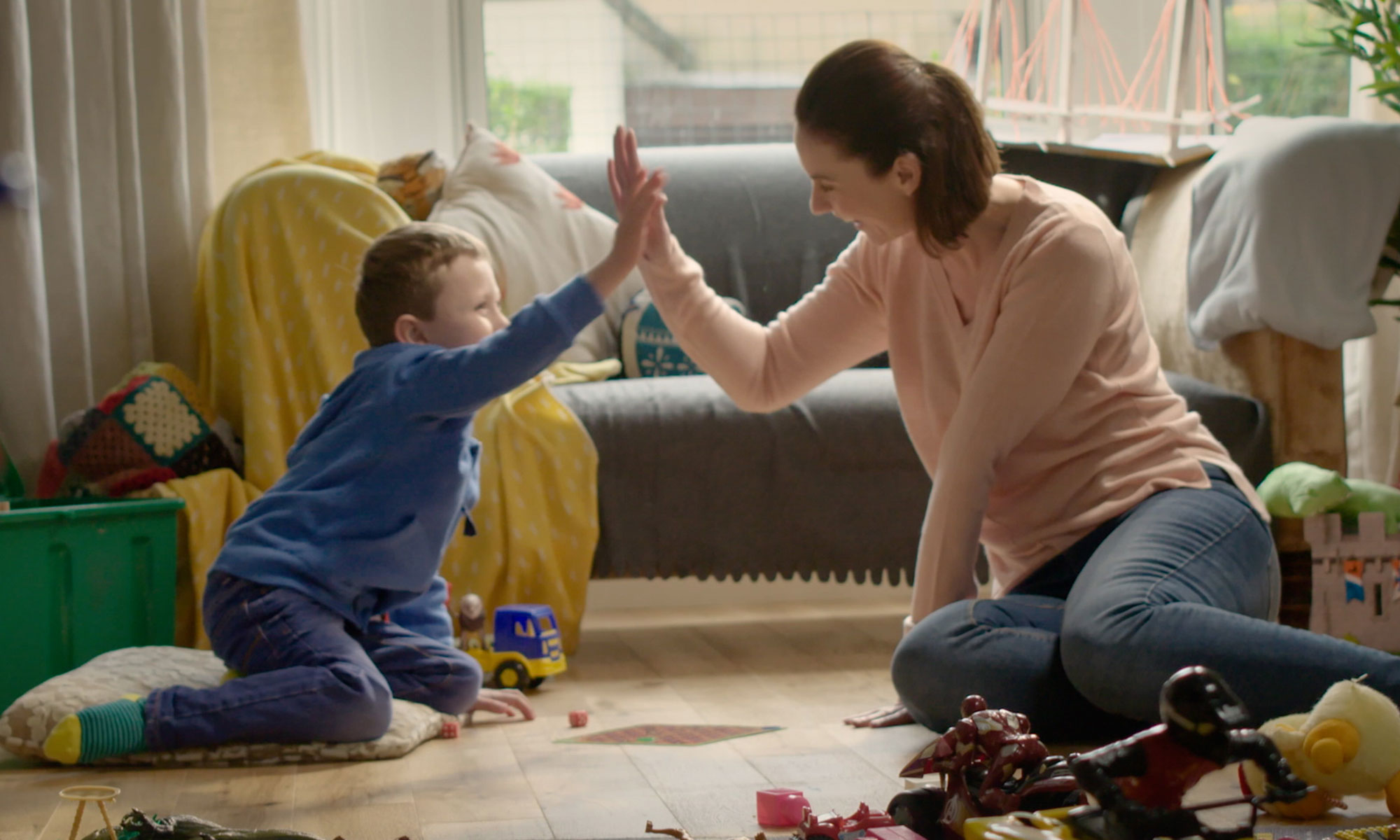
Process shows most clearly on sensitive work. For ParentClub, the Scottish Government’s support programme for parents, BrightWolf Films produced the ‘Moment of Calm’ commercial – capturing the honest chaos of family life before settling into a quiet, reassuring ending. Dynamic camera work carried the energy; the craft carried the message. Campaigns like this show how corporate film, done with care, earns public trust rather than merely filling a channel.
Watch the film: ParentClub – Moment of Calm
You can read more about the project on our ParentClub Moment of Calm case study.
Common mistakes (and how to dodge them)
We see the same handful derail corporate films, and every one is avoidable:
- Approving the idea, then re-opening it after the shoot. Lock decisions before the camera rolls; reshoots cost more than treatments.
- Briefing the film and the audience separately. If the internal view and the customer view differ, decide which film you are making.
- Casting the CEO in the starring role when a frontline voice is stronger. Leadership films land best when leadership appears briefly and sincerely.
- Choosing locations for the office’s convenience, not the film’s. A recce costs a morning; the wrong wall costs the film.
- Treating delivery as the end. The upload, the versions and the measurement plan are part of the job, not an afterthought.
None of this is complicated, but all of it is easier with a production partner who has run the process hundreds of times and will tell you the truth about trade-offs before they become expensive.
Why produce corporate video in Scotland?
Scotland offers corporate clients an unusual combination: world-class crew and craft without London logistics, and locations that give even a straightforward interview film a sense of place. Institutional support is real – Screen Scotland champions filming across the country, and Film Edinburgh supports productions shooting in the capital. For organisations based here, that means a partner who understands both your governance and your geography.
Budgeting a corporate film is less mysterious than people fear. Most of the cost is people and time: crew days, edit days and the expertise in both. Where the money goes wrong is not in day rates but in indecision – extra approval rounds, re-cuts and version sprawl. The discipline that protects the budget is the same one that protects the film: agree the story early, review with one voice, and sign off in stages rather than in a scramble the week before launch. Organisations that do this reliably get films they are still proud of years later.
Where BrightWolf Films fits
BrightWolf Films is an Edinburgh-based production company making corporate films, brand stories and campaigns across Scotland. Start with our corporate video page or our Edinburgh video production overview, and if you are planning your next film, begin with step one – a short, honest conversation about what the film needs to achieve. Everything else in this guide follows from that.
That is the whole craft in a sentence: know what the film is for, and let nothing blur it. We would be glad to help you start.


