
Type ‘local fixer Scotland’ into a search engine and you are usually a producer with a problem: a shoot happening in a country you do not know, on dates you cannot move, with a budget that will not stretch to flying your whole team out early. A local fixer is the answer to that problem. It is someone who lives here, knows the film offices, the crew base, the roads and the weather, and who turns your Scottish shoot from a leap of faith into a schedule. BrightWolf Films has spent years doing exactly this for visiting producers, agencies and broadcasters, so here is what a fixer actually does, and the seven ways one will save your production.

What a local fixer in Scotland actually does
The job title sounds informal; the work is not. A local fixer is part producer, part location manager, part logistics coordinator and part translator of everything that makes Scotland Scotland. On a serviced production the fixer takes the visiting team’s creative and makes it shootable: bookings, permissions, transport, catering, weather cover, local hires and the hundred small judgements that never make it into a call sheet but decide whether the day works. When it is done well it is invisible. The director lands, the kit is there, the location is dressed, the interviews happen, and nobody hears about the ferry booking that was moved twice to dodge a storm.
1. Permits and permissions, handled before you land
Filming on Scottish streets, parks and historic sites means permits, and the rules differ between Edinburgh, Glasgow, Highland Council and the national bodies. A fixer knows who to ask, how far in advance, and what a realistic turnaround is. That includes the specialist consents that catch visitors out: filming near listed buildings, drone permissions where they apply, and estate or landowner agreements in the countryside. Film Edinburgh supports productions shooting in the capital and the relationship a local fixer has with the film offices is precisely why permit days become routine rather than a scramble.
2. The right crew, already vetted
Scotland has a deep bench of camera operators, sound recordists, gaffers, grip and production talent, but you still have to find the right people for your specific job and confirm they are free on your dates. A local fixer books people they have actually worked with, which removes the biggest risk in hiring blind from a directory. If your shoot needs a particular specialism, from marine filming to drone work, the fixer already knows who is properly qualified and insured rather than who describes themselves that way online.
3. Locations with access that is already agreed
Fixers think in terms of drive times, light direction, tide times and the polite but firm farm manager. Instead of a recce trip that eats two days of your schedule and budget, a local fixer can shortlist locations from genuine knowledge, confirm access, and hand you a shortlist that is real rather than aspirational. On remote work, from island distilleries to Highland estates, knowing which road is single-track and where the nearest unit base can park is worth more than any location library screenshot.
4. Kit that suits Scottish conditions
Equipment hire in Scotland is straightforward in the central belt and less so elsewhere, and conditions change fast. A fixer sources kit locally where that is sensible, plans for weather cover, and knows when a generator, a four-wheel drive or an extra hour with sound blankets and a weather tent is going to save the schedule. For visiting productions, hiring locally rather than flying kit in also removes a wall of paperwork and customs bother, which brings its own quiet satisfaction.
5. Logistics: transport, accommodation and the unglamorous essentials
Crew moves, kit vans, accommodation in a town where a festival has just doubled the hotel prices, catering on a hillside: this is the unglamorous half of production that decides whether your expensive creative team spends the day filming or the day problem-solving. A local fixer builds the logistics plan around your schedule, books the realistic options rather than the map-friendly ones, and keeps a plan B in reserve because in Scotland a plan B is not pessimism, it is hygiene.
6. A fixer is your cultural and practical translator
Scots institutions have their own rhythm, from council processes to estate etiquette to how a distillery or a busy Glasgow street actually behaves on a Tuesday afternoon. A local fixer bridges that: knowing who to call, how to ask, and when the answer ‘no’ really means ‘not like that’. For overseas agencies especially, this is the difference between a shoot that feels like an obstacle course and one that feels like a well-run day in a beautiful country.
7. When something goes wrong, someone is already here
Weather turns, an actor is delayed, a hard drive fails on a Sunday. A local fixer has contacts, spare crew and spare ideas within an hour’s drive. That safety net is the least visible of the seven and, to anyone who has watched a schedule wobble, the most valuable.
Who actually needs a local fixer in Scotland
The short answer: anyone filming here without a local production base. Overseas brands and agencies bringing a campaign to Scotland, documentary teams on a fixed window, broadcasters sending a small unit, and production companies servicing a commercial with a Scottish element all sit in that bracket. If your team flies in for three days, a fixer is usually cheaper than the alternative, which is losing a day to something a local would have seen coming.
What it looks like in practice
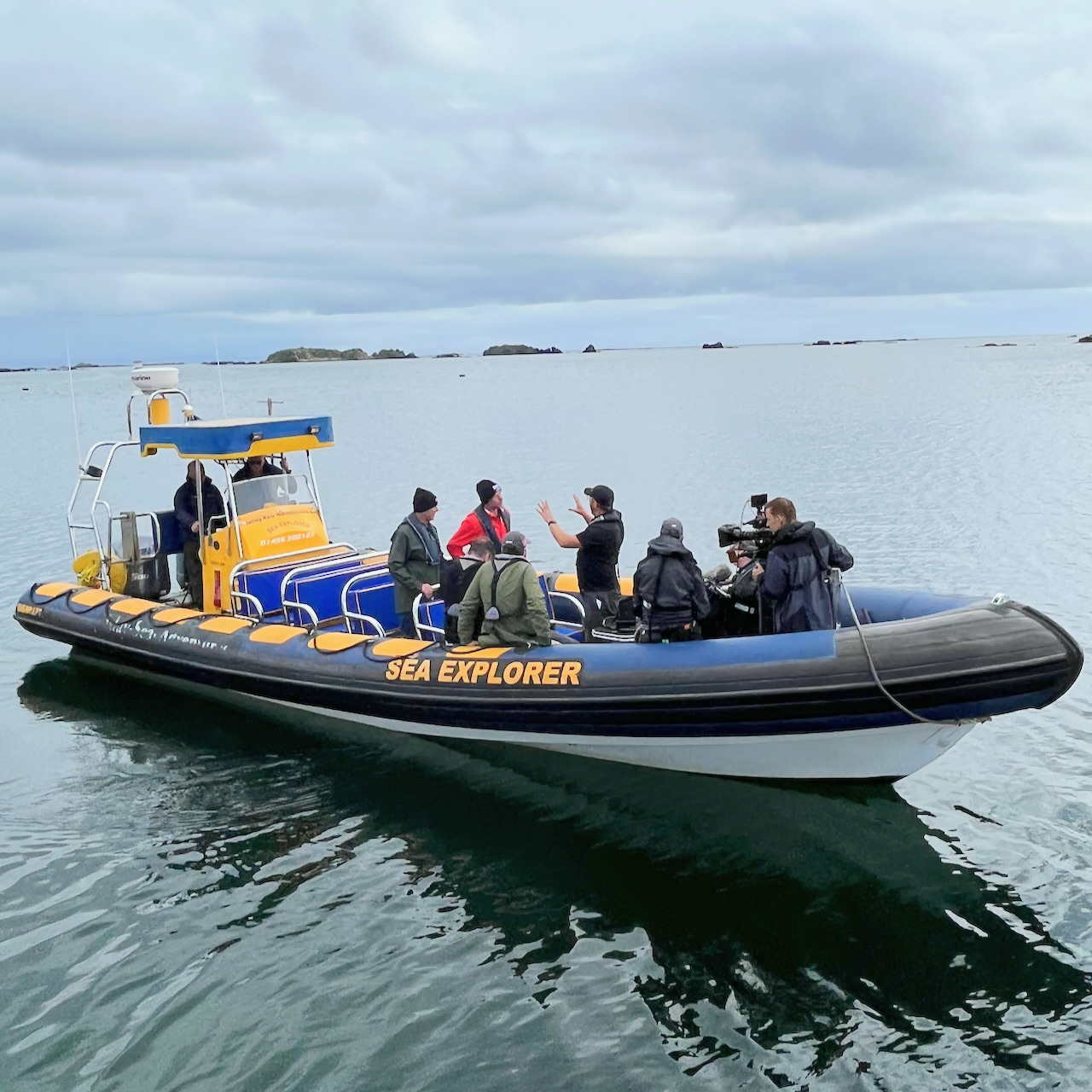
While this film was made for a different brief, it shows exactly the standard we bring to inbound productions: Watch the film: Inbound Serviced Productions in Scotland – view it here. The job was a whisky campaign for DDB Paris and Glenmorangie, and BrightWolf Films managed the filming and logistics end to end: costume, make-up, equipment hire, location scouting and the wider coordination that let the visiting creative team concentrate on the film itself. It demonstrates the core fixer promise, that a producer can arrive in a country they barely know and still have a shoot that runs like a local production. There is more background on our inbound serviced productions page.
How a fixer engagement usually runs
Most fixer jobs follow a simple arc. First, a briefing call where the visiting team walks through the creative, the dates and the constraints. Next, a written proposal covering crew, kit, locations, permits and a day-by-day plan, so the client can see exactly what is being bought. Then prep: bookings confirmed, permissions lodged, contingency held. On shoot days the fixer runs logistics so the director runs the film. Afterwards, there is wrap: kit returned, invoices tidy, footage delivered or handed off. Nothing in that arc is exotic. The value is that every step is done by someone who has done it here a hundred times.
Choosing your Scottish fixer
Ask three questions. Who exactly will be on the ground, and what have they shot here before? Can you see case studies of serviced productions, not just showreels? And what happens if the weather collapses the plan, because a fixer with a real answer to that question is a fixer worth hiring. Screen Scotland is also a useful signpost for incoming productions and maintains public resources that sit neatly alongside what a fixer provides.
How BrightWolf Films helps
BrightWolf Films offers full creative production and inbound service production from our Edinburgh base, working across Glasgow, the Highlands and the islands for brands, agencies, broadcasters and documentary teams. If you are looking for a local fixer Scotland trusts with your dates, start with our Edinburgh video production page or browse our video services overview, and tell us what you are planning. The earlier we are in the conversation, the more problems we can quietly prevent.
A good fixer is measured by the days that go uneventfully: the permit that arrived early, the crew that turned up with a plan for the rain, the location that looked exactly like the photographs. That is the standard BrightWolf Films holds itself to on every visiting production, and it is the quiet reason producers keep coming back to film in Scotland.